Efficient Operations, Sustainable Practices

From raw material to renewable fuel, our model is built on discipline, responsibility, and long-term value creation.

Operating Model

We follow a multi-feedstock approach, sourcing:

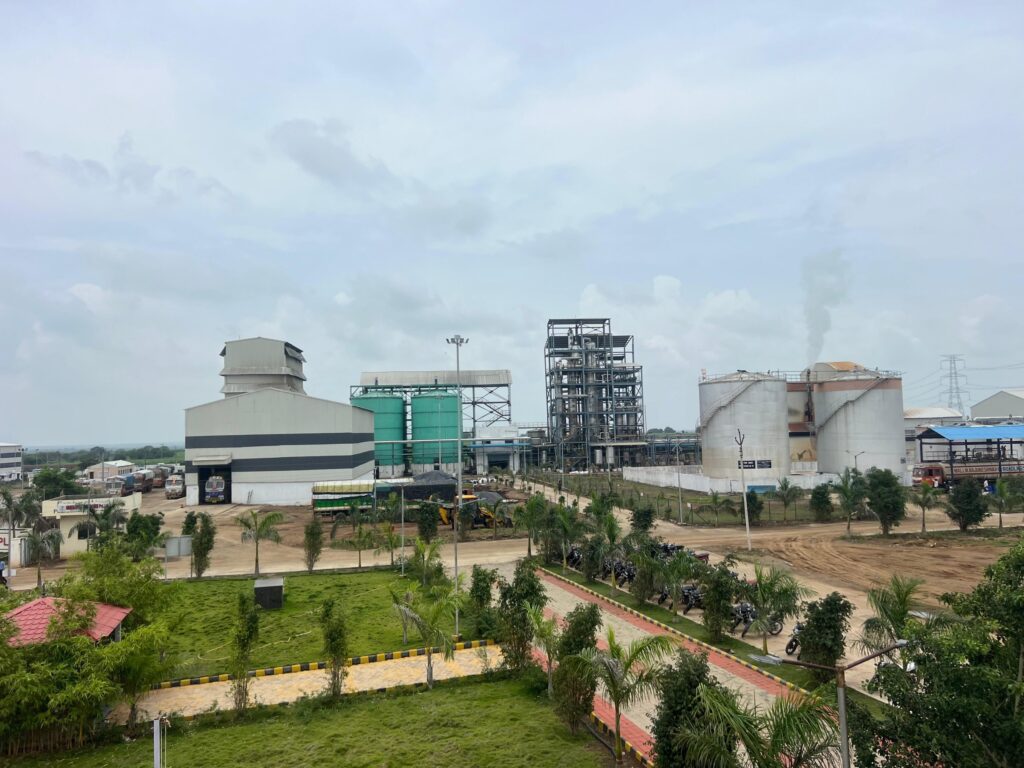
Inputs are processed through fermentation, distillation, and dehydration to produce ethanol. Alongside, we generate valuable by-products that support the circular economy.

Stakeholders Connected: Farmers, Sugar Distilleries, OMCs, cattle feed markets, food & beverage CO₂ buyers, and industrial users.

Farmers

rice, maize, other grains.

Sugar Factories

molasses and Special Denatured Spirit

Operational Performance

Our operations have stabilized quickly, moving from commissioning to steady performance in the first year.

Focus areas: utilization, feedstock optimization, and logistics efficiency.

FY 2024–25 Output: 2.24 Cr liters.

Achieved in the first full operational year — reflecting smooth ramp-up and reliable plant uptime since commissioning. Stable operations ensured consistent supply to OMCs and private buyers.

FY 2025–26 Projection: ~5 Cr liters.

Targeting more than double last year’s output through better utilization, continuous plant availability, and stronger procurement coordination. Focus on achieving full-capacity operation with minimal energy intensity. Grain Share

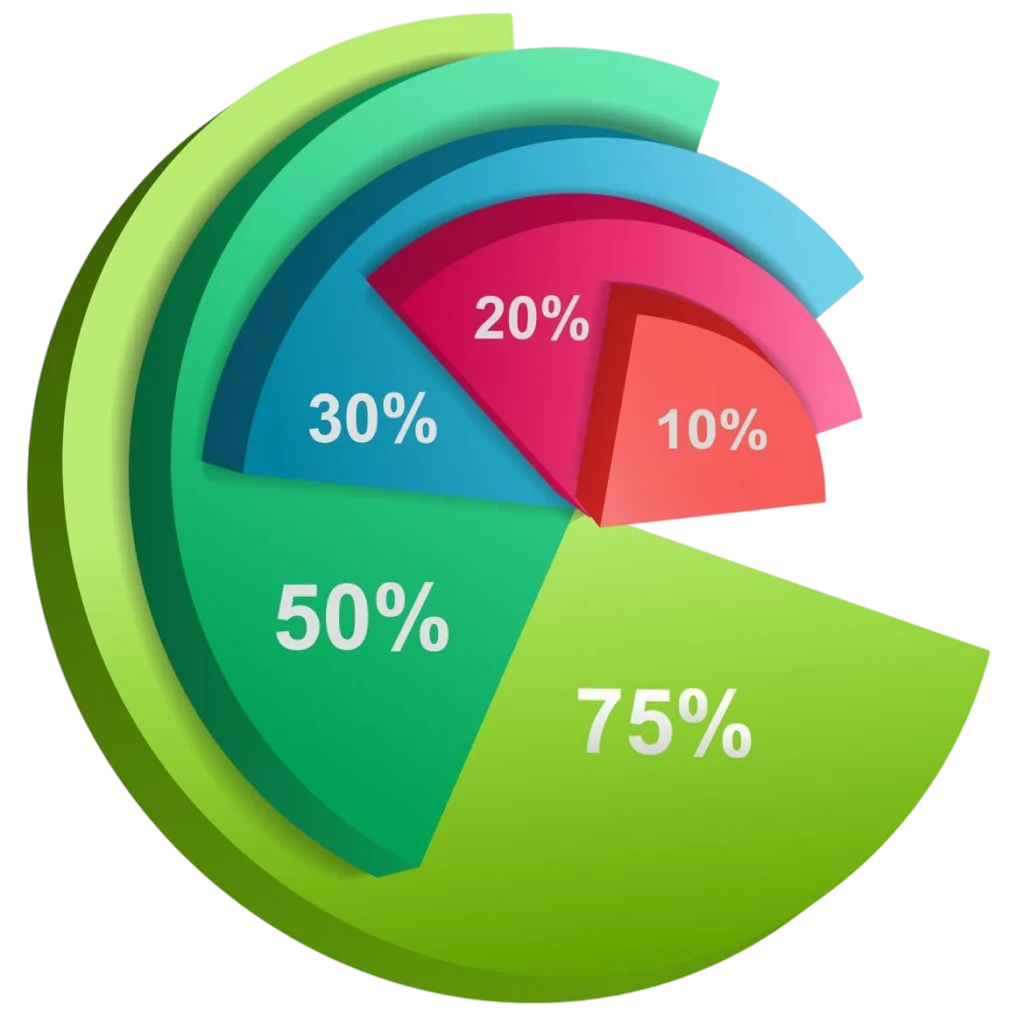
Grain Share: Grew from 36% to 65% YTD (Jan ’26).

The sharp rise in grain-based production reflects improved utilization of our newly commissioned grain distillery, enabling higher-yield, value-efficient ethanol output. Balanced sourcing between grains and SDS ensures year-round operational resilience and cost efficiency

Strong foundation for sustainable growth and long-term value creation

Sales & Volume Analysis

Performance Trends

Strong foundation for sustainable growth and long-term value creation

Capacity Growth Trajectory (KLPD)

FY 2022

100

FY 2023

100

FY 2024

100

FY 2025

200

YTD Jan 26

200

Capacity CAGR (FY22–FY25) : 100% reflecting successful capacity expansion and market penetration.

Capacity Growth Trajectory (KLPD)

FY 2022

100

FY 2023

100

FY 2024

100

FY 2025

200

YTD Jan 26

200

Capacity CAGR (FY22–FY25) : 100% reflecting successful capacity expansion and market penetration.

Volume Growth Trajectory (Million Liters)

FY 2022

1.76 *

FY 2023

2.07 *

FY 2024

3.9 *

FY 2025

22.40

YTD Jan 26

4.3 Cr

Volume CAGR (FY22–YTD Dec–25): 85.78% reflecting successful volume expansion.

* Grain based distillery was under construction in the same premises due to which the operations were at minimal

Capacity Growth Trajectory (KLPD)

Capacity CAGR (FY22–FY25) : 100% reflecting successful capacity expansion and market penetration.

Volume Growth Trajectory (Million Liters)

Volume CAGR (FY22–YTD Dec–25): 85.78% reflecting successful volume expansion.

* Grain based distillery was under construction in the same premises due to which the operations were at minimal

Technology Features

🌾

Multi-Feedstock

Rice, maize, molasses flexibility

⏱️

Continuous Operations

300+ days annual utilization

Energy Efficient

Optimized steam & power

♻️

Zero Liquid Discharge

Environmental compliance

Quality Assurance

🛡️

Purity Standards

99.99%

Fuel-grade ethanol meeting IS 15464 standards

👁️

Testing Frequency

24/7

Continuous in-process quality monitoring

📊

Average Operational Capacity Utilization

96.69%

Industry-leading operational efficiency

Technology Features

🌾 Multi-Feedstock

Rice, maize, molasses flexibility

⏱️ Continuous Operations

300+ days annual utilization

⚡ Energy Efficient

Optimized steam & power

♻️ Zero Liquid Discharge

Environmental compliance

Quality Assurance

🛡️ Purity Standards

Fuel-grade ethanol meeting IS 15464 standards

99.99%

👁️Testing Frequency

Continuous in-process quality monitoring

24/7

📊 Average Operational Capacity Utilization

Industry-leading operational efficiency

96.69%

By-Products & Circular Economy

Beyond ethanol, our operations maximize value through by-products:

DDGS

A high-protein, nutrient-dense cattle-feed ingredient produced from spent grain. It supports local dairy and poultry farmers while lowering India’s dependence on imported feedstock. Our integrated drying and handling system ensures consistent DDGS quality and year-round supply.

CO₂

Captured from fermentation gases and purified for use in food, beverage, and industrial applications. A dedicated CO₂ recovery and liquefaction unit is under development to produce food-grade CO₂, cutting emissions and adding a new revenue stream. This initiative turns process emissions into a valuable commercial product.

01

Fly Ash

A fine by-product from our energy generation system, supplied to cement and brick manufacturers. It improves material strength while diverting solid residues away from landfills — promoting resource efficiency in construction.

Impure Spirit

An intermediate alcohol stream supplied to chemical, paint, and pharmaceutical industries for solvent and formulation uses. Every drop is accounted for, ensuring zero discharge and complete resource utilization across production lines.

02

DDGS

Nutrient-rich cattle feed for farmers.

CO₂

Supply to food & beverage industry.

01

Fly Ash

Utilized by the Brick & Cement sector.

Impure Spirit

An intermediate alcohol stream supplied to chemical, paint, and pharmaceutical industries for solvent and formulation uses. Every drop is accounted for, ensuring zero discharge and complete resource utilization across production lines.

02

DDGS

Nutrient-rich cattle feed for farmers.

01

CO₂

Supply to food & beverage industry.

Fly Ash

Utilized by the Brick & Cement sector.

02

Sustainability Practices

Sustainability underpins every stage of our operations

Closed-loop water management

Closed-loop water management with Zero Liquid Discharge (ZLD).

Air & emissions compliance

Air & emissions compliance, with CO₂ recovery and sale

Full by-product valorisation

Full by-product valorisation, minimizing waste.

Energy efficiency roadmap

Energy efficiency roadmap for coal-based power.

Governance & Risk Oversight

Our operations are guided by a compliance-first and accountability-driven framework, ensuring transparency at every level of management and execution.

01 — Maker–checker reviews, audits, and transparent reporting.

Structured internal controls ensure every key process passes through independent maker–checker validation. Periodic internal audits, process reviews, and data reconciliation maintain accuracy and transparency in reporting.

02 —Board-level oversight of governance and risk.

A dedicated governance structure led by the Board oversees performance, compliance, and sustainability initiatives. Committees review financial performance, operational discipline, and risk mitigation to uphold accountability and integrity.

03 — Risk management focused on feedstock supply, regulatory shifts, and operational reliability.

Risk assessment frameworks cover feedstock supply, logistics, regulatory changes, and operational reliability. Proactive monitoring enables early identification of potential disruptions, ensuring business continuity and stable operations.
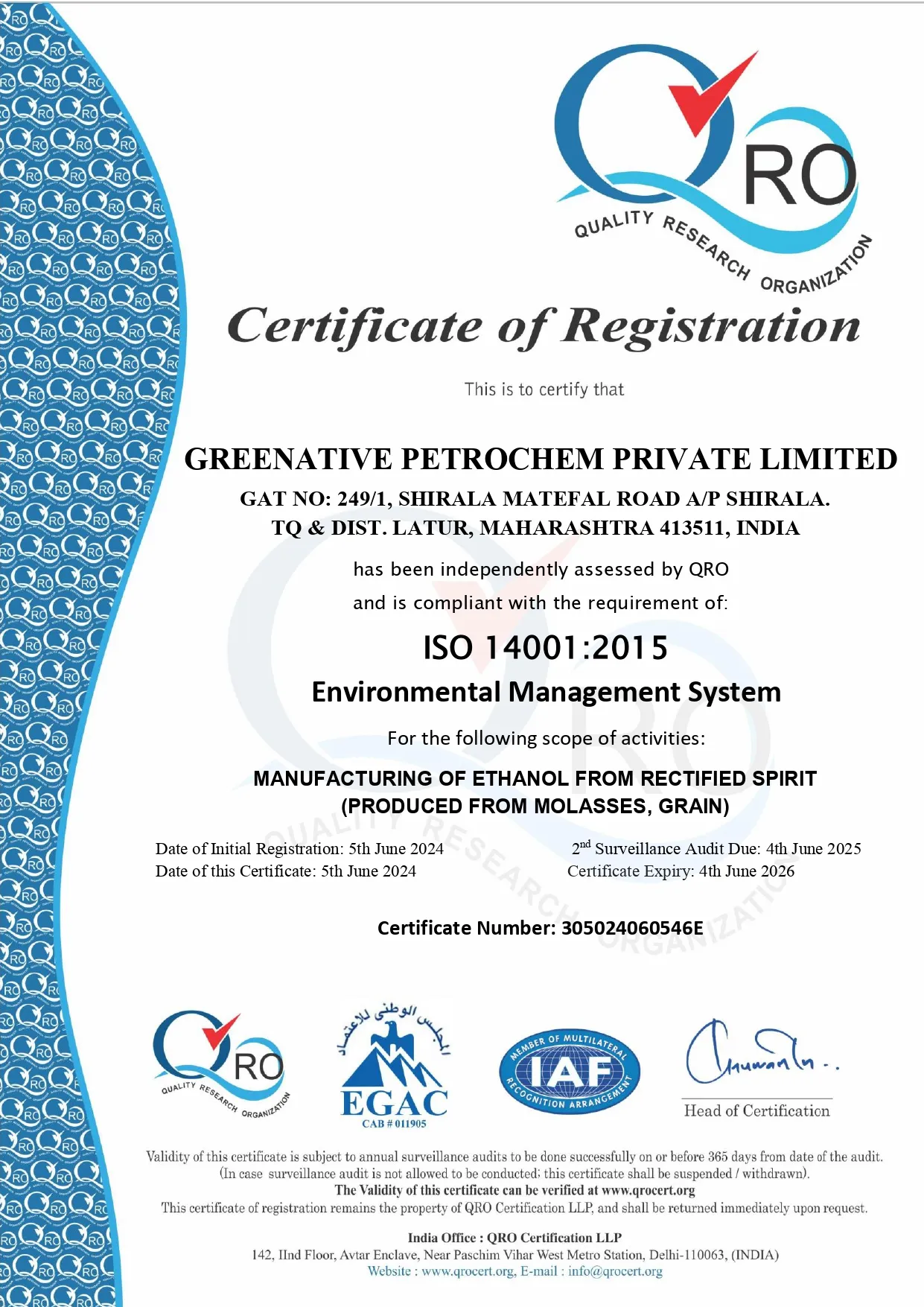
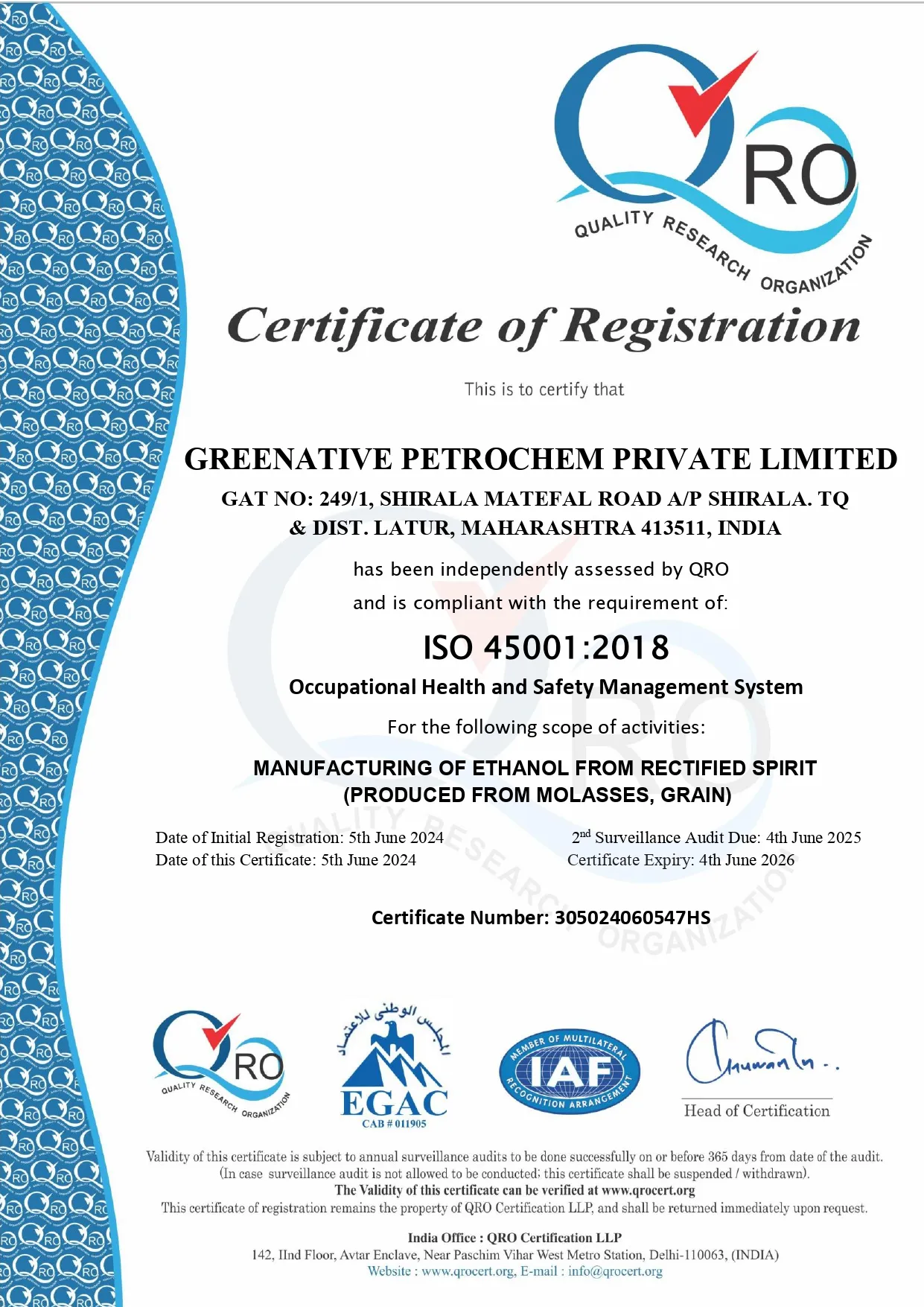
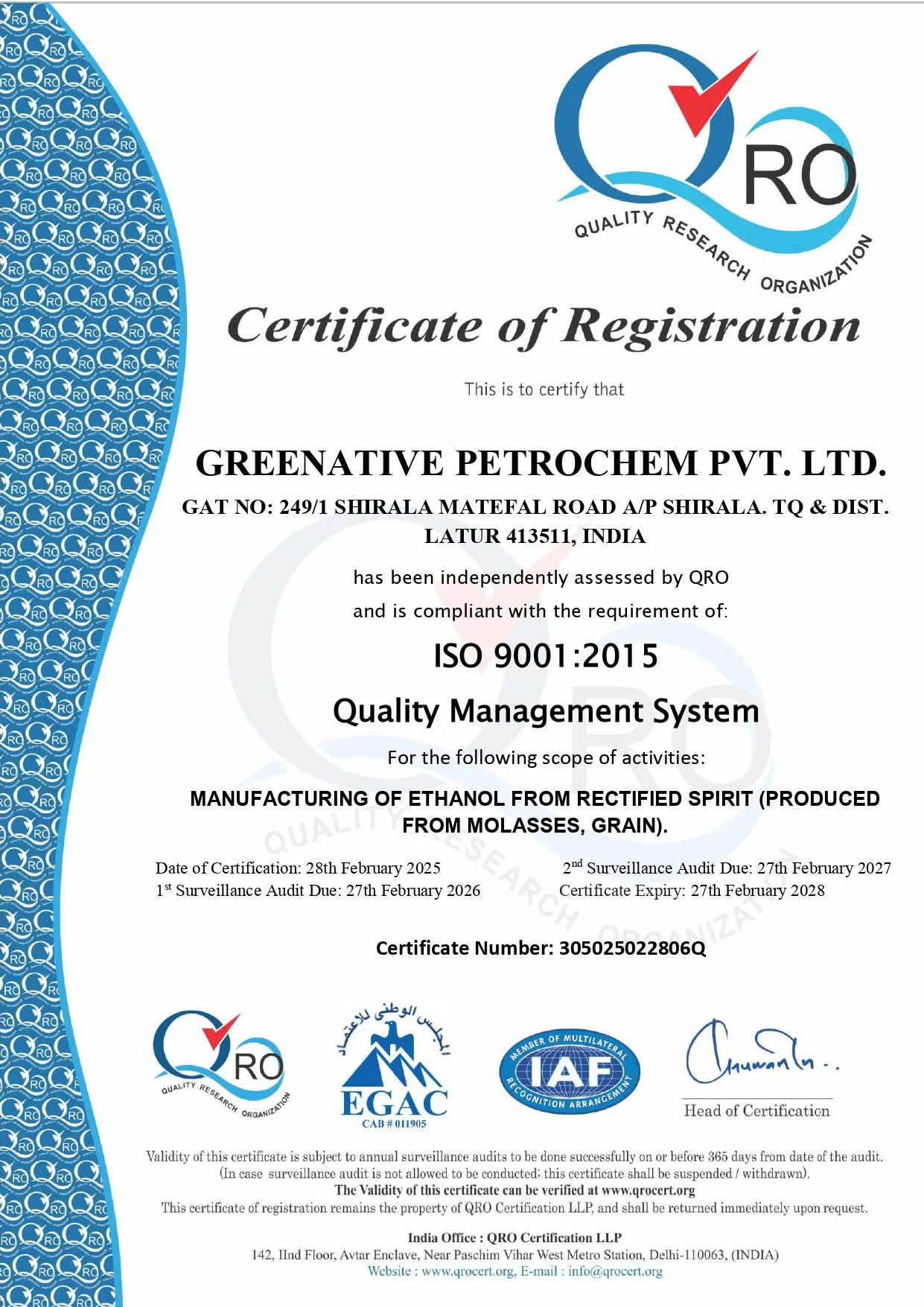
Our Certification